Deep Capture
Nike Deep Capture Studio · 3D Visualization Specialist / Lead Photographer · Applied AI Creative Technologist · 2023–2026
The brief. Nike’s Deep Capture Studio needed two things: a photogrammetry capture system that could deliver production-grade product scans on a studio schedule, and a way to move generative AI from experiments into that production line.
My own short, not a Nike production. The rig is real; the lab is not. No studio footage appears on this site.
▶ Cinematic short · 0:49
THE RIG IS REAL. THE LAB IS NOT.
LinkedIn cut, 0:49. Higgsfield, Premiere. Stills generated first, then animated. Cut in Premiere with music and effects on separate tracks. No studio footage appears anywhere on this site.
What I did. I specified and built the photographic side of a six-camera capture system: camera bodies, optics, lighting, and a custom exoskeleton sourced from Esper in the UK, with a $100,000 build budget. A 3D-artist colleague owned the downstream mesh processing; my job was to make sure every pixel going into that pipeline was as clean and repeatable as a product shoot. Roughly 1,000 to 1,500 captures per SKU, 100 to 125 SKUs a season.
Then I led the studio’s generative AI adoption: benchmarked Google’s Gemini and Veo APIs against Vizcom, built the production pipeline (batch processing, templating, repeatable render setup, product-detail adherence), and trained three teammates on it. Our team of five delivered 100+ 3D product visualizations with a specialized X-ray render treatment in four days, against an outside vendor bid of $125,000 to $150,000 and a three-to-four-week timeline.
Stack. Sony cameras · Esper capture rig, lighting, and capture software · RealityCapture · Nuke · Substance Painter.
What it shows. Hardware, optics, and lighting judgment applied to a generative pipeline, then the pipeline itself: evaluation, build, training, delivery. The capture side is where most AI-in-production projects fail; this one didn’t.
Sector 8. Badge required, sense of humor mandatory. The rig is real; the lab is not.
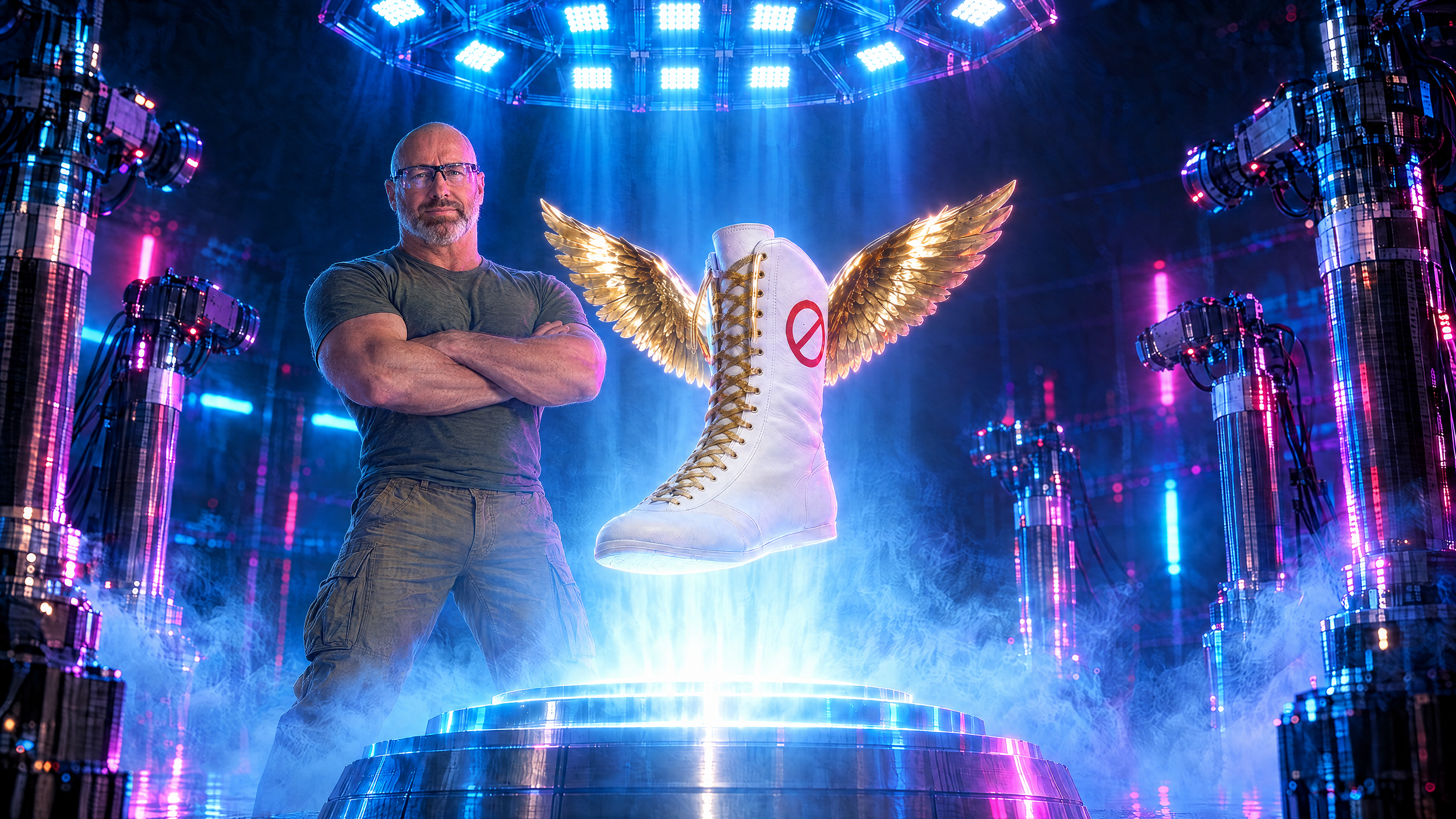
The rig, slightly enhanced. Six real cameras became sixty imaginary ones, plus wings. Nobody signed off on the wings.
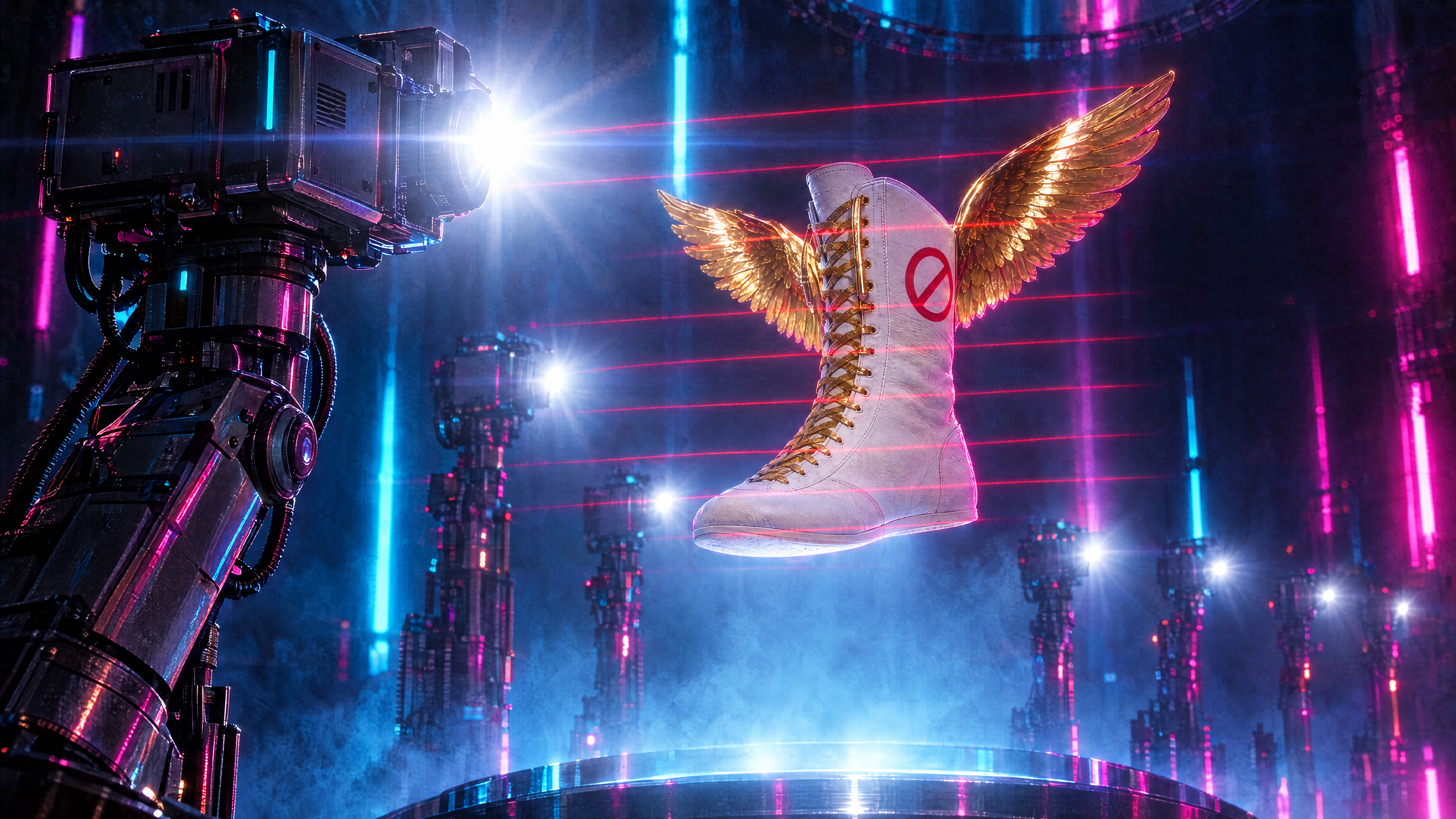
Capture. In real life it's 1,000 to 1,500 frames per shoe. In here it's one very dramatic flash.
This 3D printer is set to max. Do not try this at home. Or at work.
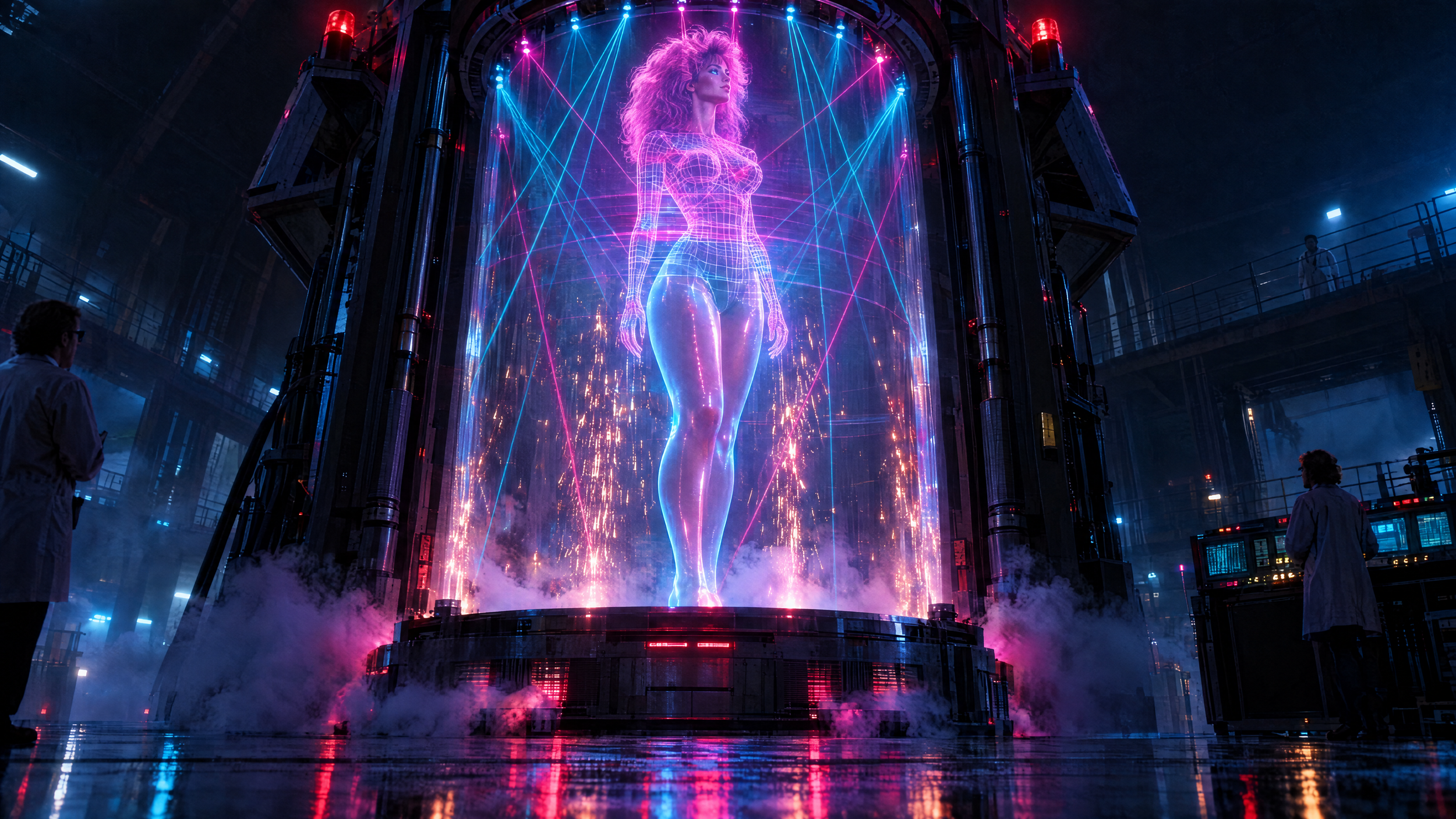
Print in progress. The lab coats are purely for morale.
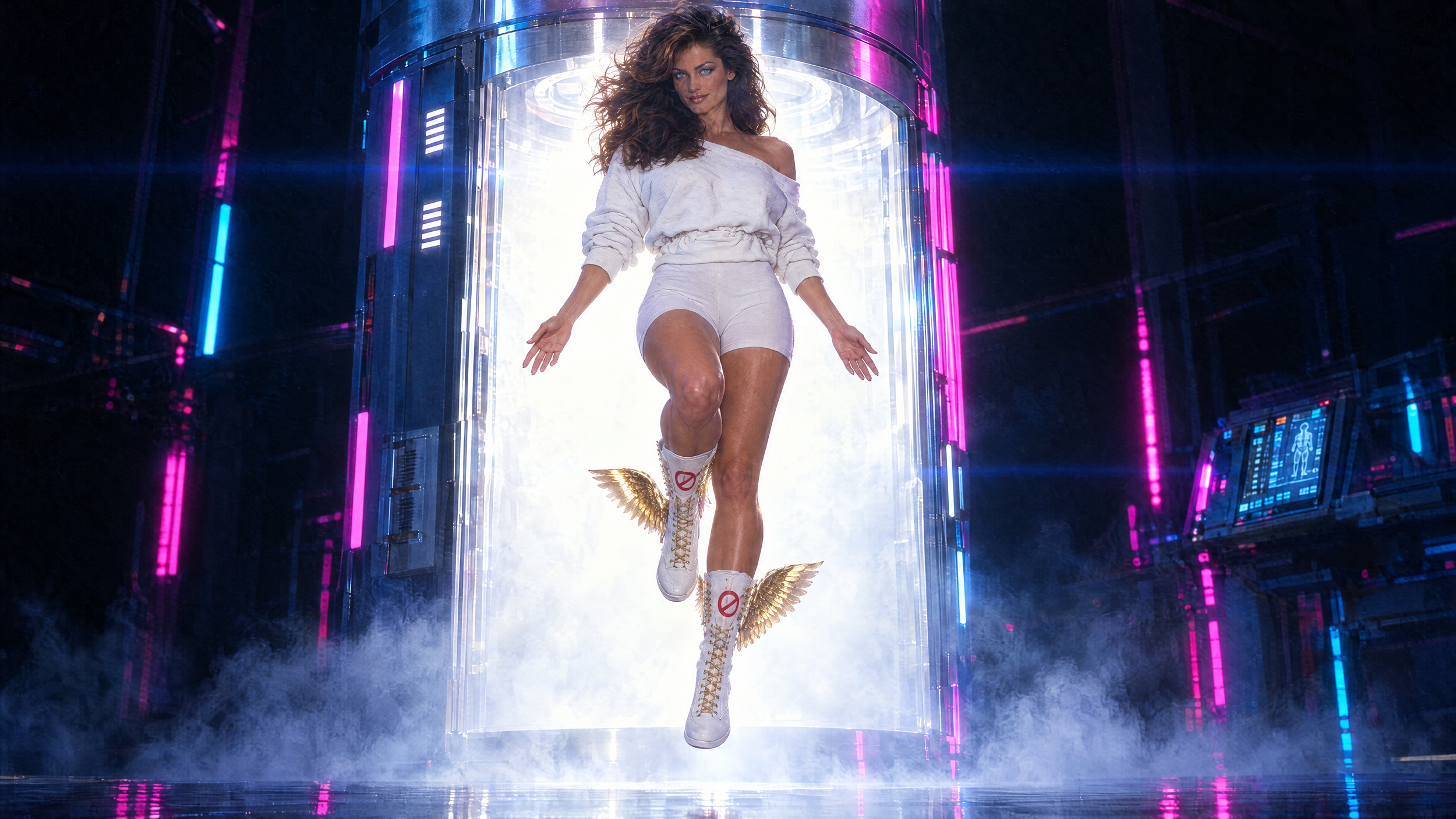
Weird Science rules: you ask for a better product shot and the machine overdelivers. Winged high-tops included.
Quality control: passed. Color accuracy within tolerance. Hair volume well outside it.
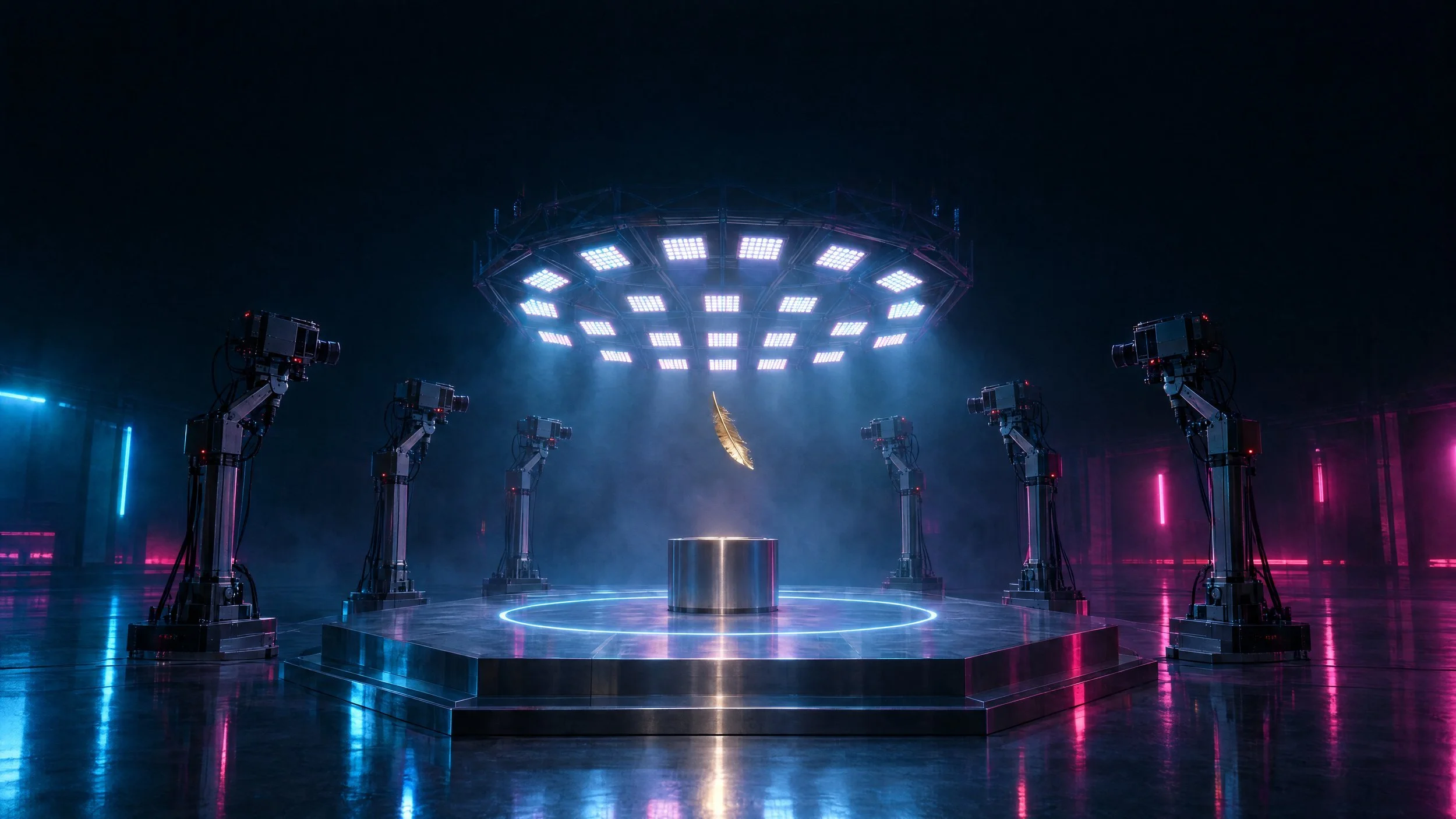
Lights down, rig parked. Back to scanning real shoes on Monday.